

A decade ago, an office was primarily expected to accommodate a team and provide everyone with a workstation. Today, we expect much more from it: spaces for focused work and collaboration, online meetings and the free exchange of ideas.
The office of the future is not about futuristic gadgets. It is a space that responds to the way teams actually work and changes as the company’s needs evolve.
Why is the office of 10 years ago no longer enough?
What has changed most is how we use the office. In many organisations, on-site work is increasingly combined with remote work, while employees carry out a wide range of tasks throughout the day rather than repeating the same type of work. Eurofound, the European Foundation for the Improvement of Living and Working Conditions, has reported that organisations across Europe are developing and adapting hybrid working models to the real needs of their teams.
In practice, this means that on the same day we may need several hours of focused work, a short team meeting, an online call with a client and a longer project discussion. In this context, the traditional layout with one assigned desk for every employee does not always work. A modern office should make it easy to choose a space that suits the task at hand.
One space cannot support every task
A well-designed office does not need to consist of many separate rooms, but it should provide different working environments.
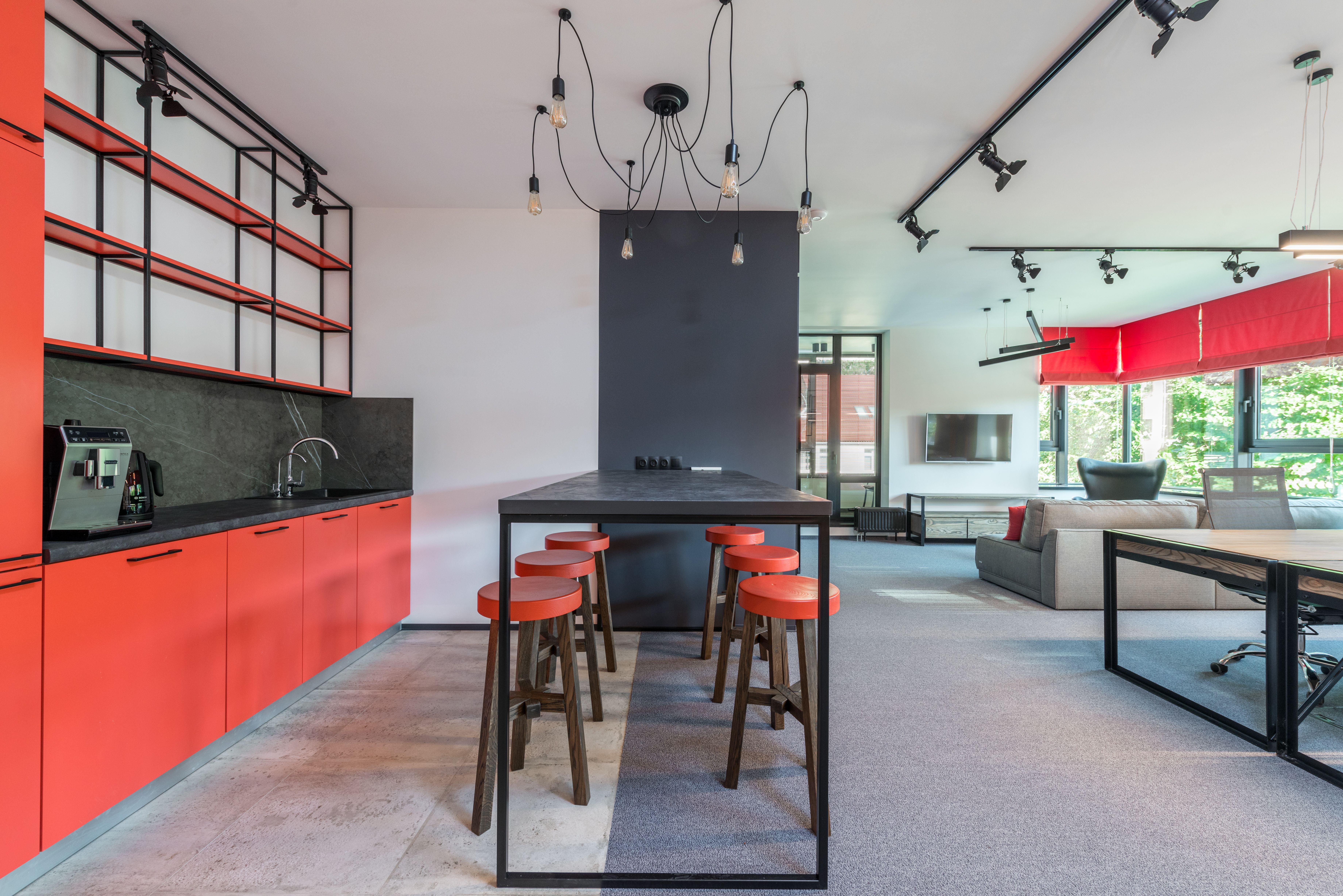
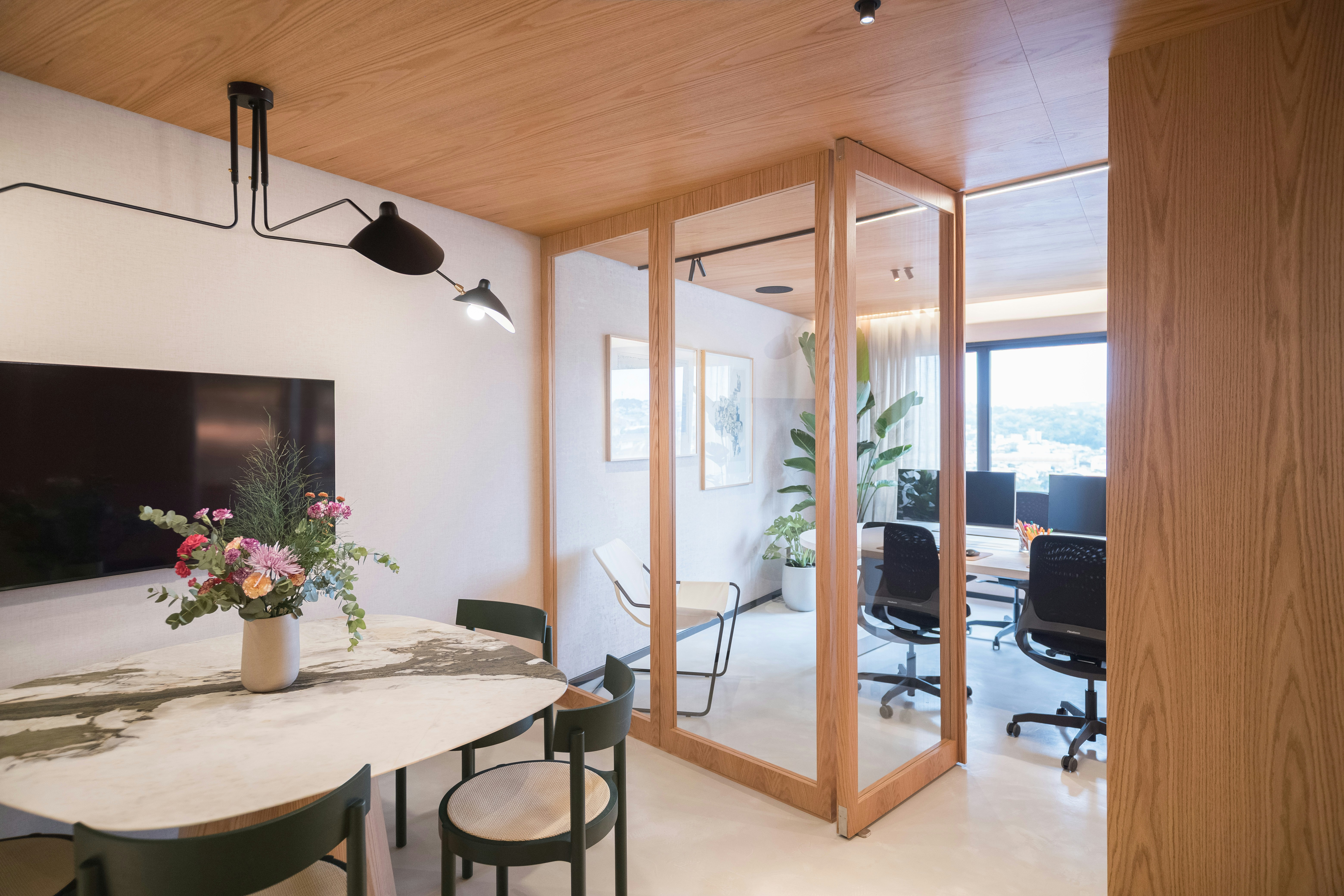
Tasks that require concentration are best carried out in a quiet space that limits noise and other distractions. Teamwork, on the other hand, requires areas that encourage conversation, the exchange of ideas and joint project work. In addition to meeting rooms, informal spaces are equally important. Comfortable seating, a shared kitchen or more relaxed meeting areas are ideal for short conversations and breaks.
The aim is not to create as many zones as possible, but to make sure that each one has a clearly defined function and responds to the real needs of the team.
How is hybrid work changing the role of the office?
In a hybrid working model, employees do not come into the office every day. This means it is worth taking a different approach to how the available space is used.
The office is becoming more than just a place to carry out everyday tasks. It is also a space for meeting as a team, collaborating and communicating directly. Eurofound points out that in hybrid working models, presence in the office may be particularly important for collaboration and interpersonal contact. This does not mean, however, that the office stops being a place for individual work. There is still a need for spaces where employees can focus and work independently.
A well-designed office of the future should therefore support different scenarios rather than forcing everyone to work in the same way.
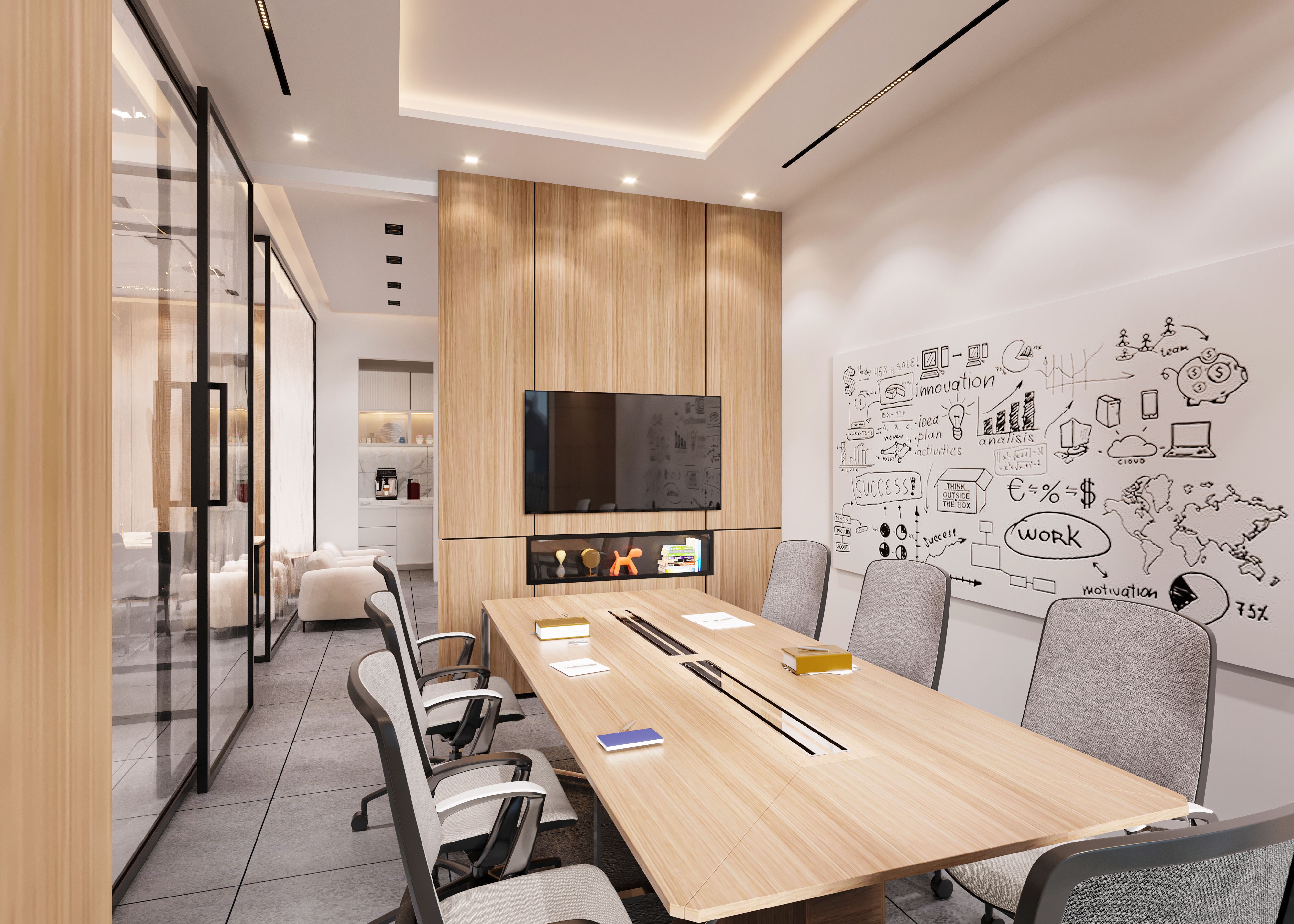
What should a modern meeting room look like?
A conference room is no longer used only for conversations between people sitting around the same table.
With hybrid work, some participants may be in the office while others join remotely. In practice, this means that the room needs not only enough space, but also a reliable internet connection and technology that enables smooth online meetings.
Technology should support work rather than make using the space more complicated. Quick device connections, screen-sharing options and easy presentation controls can help make meetings run more smoothly and reduce the number of unnecessary devices.
These are the kinds of solutions that make technology feel like a natural part of the office.
Flexible space can change with your business
The needs of an organisation rarely remain the same for many years. A team may grow, some employees may move to a hybrid working model, or the company may need an additional meeting room or more space for collaborative work.
That is why flexible office space gives companies greater freedom than a layout designed for one fixed way of working.
At Giant, office space is available from individual modules to entire floors and can be arranged to meet the needs of a specific tenant. The open floor layout can accommodate both open-plan offices and private rooms or meeting spaces.
This means the office can be planned around the way the team actually works, rather than forcing the team to adapt to a ready-made layout.
What should you look for when choosing a modern office?
Before making a decision, it is worth asking a few questions.
Can the layout be adapted to the way your team works? Are there spaces for focused work as well as collaboration? Does the office support both on-site and online meetings? Can the space change as the company grows? What is the technical infrastructure like? Does the workspace support comfortable working conditions throughout the day? How convenient is the commute and how much parking is available?
This approach makes it possible to assess an office not only in terms of floor area and the number of workstations, but also in terms of how well it supports everyday work.
FAQ
Does the office of the future have to be open plan?
No. Open space is only one of many possible solutions. Depending on the nature of the team’s work, a modern office may combine open-plan areas with private rooms, meeting rooms and spaces designed for focused work.
Does every company need the same types of spaces?
No. Office layouts should reflect the size of the team, the type of work performed and the way work is organised. A smaller team may need a much simpler layout than a large organisation.
Does the office still matter in a hybrid working model?
Yes, but its role may differ from that of a traditional office. It can serve as a place for collaboration, team meetings and tasks that require working conditions that are difficult to replicate outside the office.
Is office location still important?
Yes. A convenient commute matters even when employees are not in the office every day. Giant is located at 151 Głogowska Street in Poznań, close to public transport and with parking available on site.
An office that can change with your business
A modern office does not have to be designed around as many desks as possible. What matters more is creating a space that supports focused work, collaboration, meetings and responds to the changing needs of the team.
If you are looking for modern office space to lease in Poznań, explore Giant’s available office spaces and layout options.